
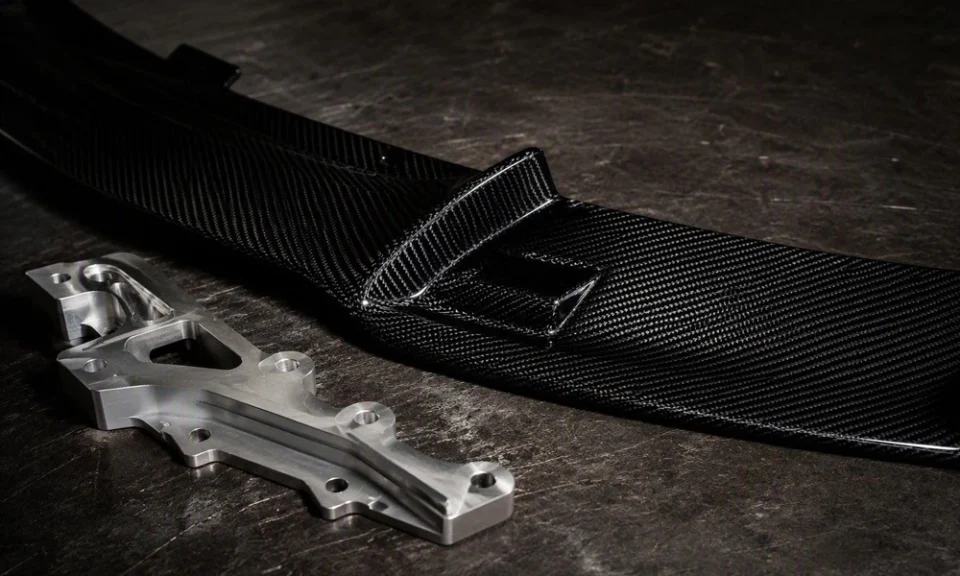
The skeleton and the skin follow different rules.
Look at how modern performance cars are actually built and a curious pattern emerges: the most expensive cars put carbon fiber in the structure, the invisible skeleton, while many still wear aluminum or even steel skins. Meanwhile, in the aftermarket, owners do the opposite, bolting carbon panels onto steel chassis. Structure versus skin turns out to be two different decisions with two different logics, and understanding the split makes you a sharper buyer than most.
What Each Job Actually Demands
The chassis is a stiffness problem. It must resist bending and torsion, hold suspension geometry under load, and protect occupants in a crash. All while weighing as little as possible. That is a pure strength-to-weight and stiffness-to-weight contest, which is carbon’s home game: laminates engineered ply by ply, with fibers oriented exactly along the load paths. The carbon steel vs carbon fiber comparison shows why carbon wins that contest decisively when cost is not the binding constraint.
Body panels are a different assignment. They must be cheap to produce in volume, dent-resistant in parking lots, repairable after minor crashes, paintable on a fast line, and replaceable anywhere in the world. Those requirements favor metal almost perfectly. Steel and aluminum panels stamp in seconds, survive shopping carts, and can be fixed by any body shop on earth. The panel’s job is abuse management, not ultimate performance. And the materials match the job.
Why the Supercar Inverts the Aftermarket
A supercar maker can justify a carbon monocoque because the chassis is designed once, amortized over the model’s life, and its stiffness benefits every mile and every lap. The same maker might still hang aluminum doors on it, because door skins meet parking lots and insurance adjusters. The aftermarket buyer inverts the logic: the steel chassis is fixed, so the accessible upgrade is the skin, hoods, roofs, trunks, wings, where carbon removes weight high up on the car, exactly where physics charges the most for it. Same materials, opposite entry points, both rational.
The Crash-Behavior Divide
Underneath the economics sits a physics difference. Steel manages crashes by deforming. Crumple zones fold in designed ways, absorbing energy in bent metal. Carbon manages energy by shattering in controlled fracture, dissipating force through micro-failures across the laminate. Both philosophies work; Formula 1 survival cells prove carbon’s version every season. But they fail differently afterward: bent steel announces itself and can sometimes be pulled straight, while damaged carbon demands expert inspection because delamination hides. The carbon Kevlar hybrid approach exists partly to soften exactly this brittleness in impact-prone zones.
The Mixed-Material Present
The industry’s answer, right now, is neither material alone. Walk around a modern performance car and read the materials like a map: high-strength steel in the safety cage where crash predictability is law, aluminum in the closures where repair economics rule, carbon in the roof and driveshaft where weight sits highest and spins fastest. BMW’s M cars have run carbon roofs for two decades; the Chevrolet Corvette mixes materials panel by panel; every supercar blends the three. The mixed-material car is not a compromise. It is the answer. Each material assigned to the job its physics does best.
This is also why the ‘steel versus carbon’ framing, while useful, misses the real skill. The art is not choosing a winner. It is zoning the car. Knowing which panels live in the weight penalty box, which live in the impact zone, and which live in the repair shop’s future. Engineers with budgets do this zone by zone. Enthusiasts with a parts catalog can do exactly the same.
When the Split Flips
The structure-skin split is not permanent, it is economic. As carbon production scales and repair networks mature, the boundary moves. Premium EVs now use carbon and composite structure in more places, because battery weight makes every kilogram of body count double. Race cars already run full carbon structure and carbon panels, because their crash economics are different, parts are replaced, not repaired. Watch the boundary: wherever repair costs stop mattering and weight starts mattering more, carbon crosses it.
What This Means for Your Car
- Steel chassis, carbon skin: the sweet spot for street builds. Structure stays repairable, panels shed weight.
- Carbon aero on any chassis: stiffness where airflow loads it, at any budget level.
- Full carbon structure: factory territory today, kit and race territory tomorrow.
- Metal in heat and strike zones: some boundaries are physics, not economics.
The skeleton and the skin are different arguments, and the industry has been quietly having both for thirty years. Put carbon where stiffness pays and metal where abuse lives. And when someone tells you one material should do everything, you will know they have confused a preference for a plan. Zone by zone, part by part, that is how the best builds have always been made, whether anyone wrote the rules down or not.
