
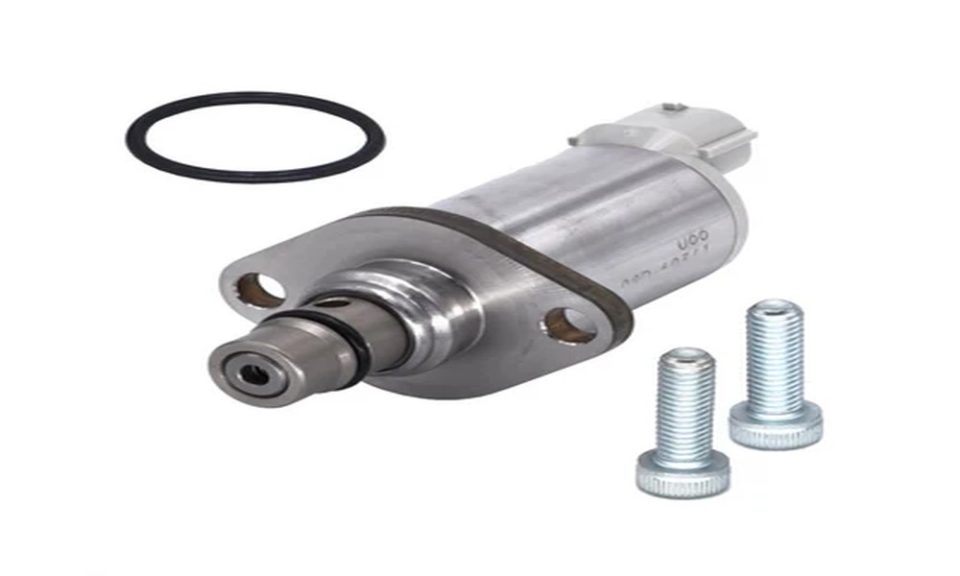
A suction control valve is a small but vital part. It helps control fuel pressure so your engine gets the right fuel at the right time. When fuel pressure is steady, your truck or ute runs smoothly and is easy to drive.
On many common-rail setups, the fuel suction control valve works with the pump. It meters fuel before it hits the rail. This balance is key for diesel engine performance, whether you’re hauling, towing, or driving long distances.
If the suction control valve can’t regulate, fuel delivery can be off. This might cause a rough idle, hesitation, weak pull, or hard starting. Over time, this can also stress other fuel-system parts.
This guide explains what the valve does, how it helps diesel engines, and why fuel pressure control is important. It also talks about fitment for Australia’s driving conditions, spotting early failure signs, and comparing OEM-style versus generic parts. Plus, it covers what to check after installation to ensure fuel system pressure is correct.
Key Takeaways
- A suction control valve helps maintain stable fuel pressure control for consistent power.
- The fuel suction control valve meters fuel to support smooth diesel engine performance.
- Unstable fuel system pressure can cause too much or too little fuel delivery and lead to drivability issues.
- Hot, long-distance Australia driving conditions can make small fuel pressure control problems worse.
- The guide covers operation basics, compatibility checks, fault symptoms, part selection, and post-install verification.
- Early attention to fuel system pressure changes can help protect long-term reliability.
How a Fuel Suction Control Valve Supports Engine Performance and Efficiency
A fuel suction control valve keeps the diesel system balanced. It ensures consistent fuel pressure at the pump inlet. This balance leads to smoother engine performance, making driving easier.
It also controls fuel metering. By keeping the system in the right range, injectors deliver fuel more evenly. This results in better combustion, improving engine efficiency without extra fuel.
This stability boosts fuel efficiency too. With the right pressure, the engine uses less fuel to meet demands. Over time, these small savings add up, helping your diesel fuel go further.
Reliability is key, just like saving money. A good valve can handle high heat and pressure, common in modern engines. It keeps the system running smoothly, reducing stress on the pump and preventing problems.
Many people notice practical benefits after installing a new valve. It fits well and works like the original. Drivers see smoother starts, less hesitation, and more consistent performance.
| What the valve influences | What you may notice behind the wheel | Why it matters in a diesel system |
| consistent fuel pressure | Smoother idle and fewer surges during light throttle | Keeps rail supply stable so injector events stay even |
| engine responsiveness | Cleaner tip-in when pulling away or overtaking | Reduces lag caused by pressure swings and delayed correction |
| fuel metering | Less stumble and a more consistent feel under load | Supports controlled injector delivery for predictable combustion |
| engine efficiency | More stable power with fewer harsh rev changes | Helps the ECU hit targets without fighting unstable supply |
| fuel efficiency | Fewer moments where the engine feels like it’s working harder than needed | Limits overfueling used to mask pressure drops |
| diesel fuel economy | More consistent consumption across school runs, commutes, and towing | Maintains the pressure range that supports efficient combustion |
Suction Control Valve: What It Is and Why It Matters for Modern Diesel Fuel Systems
A suction control valve is a device that controls fuel flow from the tank to the engine. It keeps the pressure right in a diesel fuel system. This is important for real driving, not just in a test bay.
It’s often called a fuel pump control valve. It sits near the fuel pump and works when the engine is running. As the load changes, like when towing, it adjusts fuel delivery to match what the injectors need.
This helps keep pressure steady without lag or waste. It’s part of a network in modern diesel systems. In Toyota systems, it works with the fuel pump, filter, pressure regulator, and injectors.
| Part | Primary role in a diesel fuel system | What it controls | What can happen when control is off |
| Fuel pump control valve (SCV) | Adjusts incoming fuel flow to support target pressure | Metering into the pump based on demand | Under-pressurization can cause hard starts; over-pressurization can lead to rough running |
| Fuel pressure regulator | Keeps fuel rail pressure consistent so injectors operate correctly | Pressure stability at the rail | Unstable rail pressure can trigger misfires and uneven power delivery |
| Fuel filter | Protects precision parts from contamination | Particle removal before sensitive components | Restriction can mimic low pressure and strain the pump |
When comparing fuel pressure regulator vs SCV, the main difference is their role. The regulator keeps rail pressure steady. The SCV manages fuel flow to match demand, avoiding under- or over-pressurization.
If the valve fails, symptoms can seem random. Drivers might notice poor fuel economy, engine misfires, or hard starts. This is why modern designs are built to fit well and last in tough conditions.
Vehicle Compatibility and Fitment Checks for Australian Driving Conditions
A suction control valve in a common-rail diesel has a big job. It makes sure the pump gets the fuel pressure the ECU wants. So, checking vehicle fitment before buying is very important.
Under Australian conditions, small mistakes can cause big problems. This is true, more so when driving long distances. Here, steady fuel pressure is essential.
Begin with the basics, then get detailed. Knowing the model year is key because updates can change things. Also, make sure the diesel is compatible. This means the engine and fuel system must match exactly.
- Confirm make, model, and engine code, then complete model year verification against the build plate or registration details.
- Remove and read the original valve ID to lock in a clean part number match.
- Compare the replacement’s specs (connector style, mounting points, flow range) to the original to protect diesel compatibility.
- If anything looks off, ask a qualified diesel workshop or parts specialist before ordering.
| Fitment item | What to check | Why it matters in heat and load |
| Make/model/engine family | Exact variant and engine code, not just the badge | Wrong family can miss target pressure under heat and load, leading to surge or harsh running |
| Original valve ID | Photo the stamping and confirm part number match | A near-match can drift under long-distance driving, increasing return flow and fuel use |
| Connector and mounting | Plug shape, pin count, O-ring seat, bolt pattern | Minor fit issues can become leaks or intermittent signals when temps rise in Australian conditions |
| Replacement specifications | Supplier spec sheet vs. OEM-style dimensions and range | Stable control supports consistent rail pressure when towing or climbing in heat and load |
Using the wrong valve can cause big problems. You might see a rough idle, noise, hard starts, or a check engine light. It can also stress the injectors and the pump.
How to Identify a Faulty Suction Control Valve Before It Causes Bigger Problems
At first, problems with the suction control valve seem small. But they can quickly get worse. The valve helps keep fuel flow steady. If it fails, the engine might get too much or too little fuel.
This can cause the engine to run rough. It might happen during busy times or long drives.
Start by checking the dashboard. A check engine light that keeps coming back is a sign. It often happens with new problems. A hard start in the morning is another warning sign.
Listen for unusual sounds from the fuel system. A high-pitched whine, faint hiss, or buzzing near the engine can mean trouble. If these sounds match a sudden misfire, it’s a clear sign.
Also, watch your fuel economy. If it gets worse without a change in driving, it could be a sign. Drivers often notice this on long trips where fuel goes faster than usual.
A fuel pressure test can help figure out what’s wrong. If the pressure is unstable or off, it could be the problem. A mechanic can check and see if the valve is the issue or if something else is wrong.
| What you notice | What it can mean in the fuel system | Quick check to record | What to watch next |
| check engine light comes back after a short drive | Fuel pressure control drifting, triggering fault logic | When it appears (cold start vs warm), and whether power feels reduced | More frequent warnings during stop-start driving |
| hard start, specially first start of the day | Pressure takes too long to build, or bleeds off between starts | Crank time in seconds and outside temperature | Longer crank and rough idle right after firing |
| misfire under light throttle or at idle | Fuel delivery swings lean/rich as pressure stability drops | RPM range where it happens and whether it clears at higher load | Hesitation, surging, and uneven idle |
| poor fuel economy without a route change | Over-fueling or inefficient injection timing response | Liters per 100 km (or tank range) over two fill-ups | Stronger fuel smell, soot, or sluggish response |
| fuel system noises like whining or hissing | Pump and valve working harder to maintain target pressure | Where the sound is loudest and whether it changes with RPM | Noises grow louder as symptoms become more consistent |
| fuel pressure test shows unstable or out-of-spec readings | Loss of precise metering and pressure control at the pump inlet | Idle and loaded readings, plus how fast pressure responds | Worsening drivability and repeat fault events |
Choosing Between OEM-Style and Generic Suction Control Valves
Choosing between OEM-style and generic suction control valves depends on your needs. In Australia, the long roads and heat can show weak parts. So, specs that stay the same are important.
Buyers look at how well the valve fits, controls pressure, and installs. They want it to be easy and predictable.
Start by comparing the basics: build, pressure range, and install time. OEM-style valves often have metal bodies and steady manufacturing. Generic options might work, but results can vary.
| What you compare | OEM-style equivalent | Generic option | What it can affect |
| Material construction | Durable metal housing is commonly specified | Varies by model; may be plastic or lower-grade metal | Durability and heat resistance over time |
| Stated pressure range | 30-50 psi | 20-40 psi | Pressure stability under load and idle quality |
| Install time (typical) | 15-20 minutes | 20-30 minutes | Installation predictability and rework risk |
| Compatibility confidence | More consistent match to common pump designs | Can require extra checks before final fit | Fitment accuracy and fewer surprises on assembly |
People often choose OEM-style for better fuel efficiency and smoother engine. This is because of the material quality and pressure control. Generic valves can work, but results vary more.
Before buying, make a simple checklist. Match part numbers, check model and year, and compare specs.
- Check part number against the existing valve and catalog notes.
- Confirm model/year fit to protect fitment accuracy.
- Compare specifications, including pressure range and connector details.
- Read customer feedback for reliability comparison signals like repeat failures or smooth long-term use.
- Consult a qualified technician when the listing is unclear or the vehicle has prior fuel-system work.
Real-world fit is key. Some users say OEM-style valves fit like the original and work the same. They might notice small differences, but it’s often worth it for durability.
Installation Overview and Post-Install Checks for Correct Fuel Pressure
Start by parking on a flat surface. Turn off the engine and let it cool down. Then, disconnect the battery to avoid electrical issues.
Accessing the fuel pump is next. In many Australian cars, it’s in the tank. You can get to it by lifting a rear seat or removing a panel. Use basic tools and keep it clean to avoid contamination.
Take out the old valve carefully. Use the right tool to avoid damaging nearby parts. Put in the new valve, making sure it’s aligned right. Tighten it securely.
Put everything back together, reconnect the power, and start the engine. Check for leaks around the pump and any joints you touched. Use a fuel pressure gauge to check the pressure. It should be in the correct range at idle and when you’re driving lightly.
