
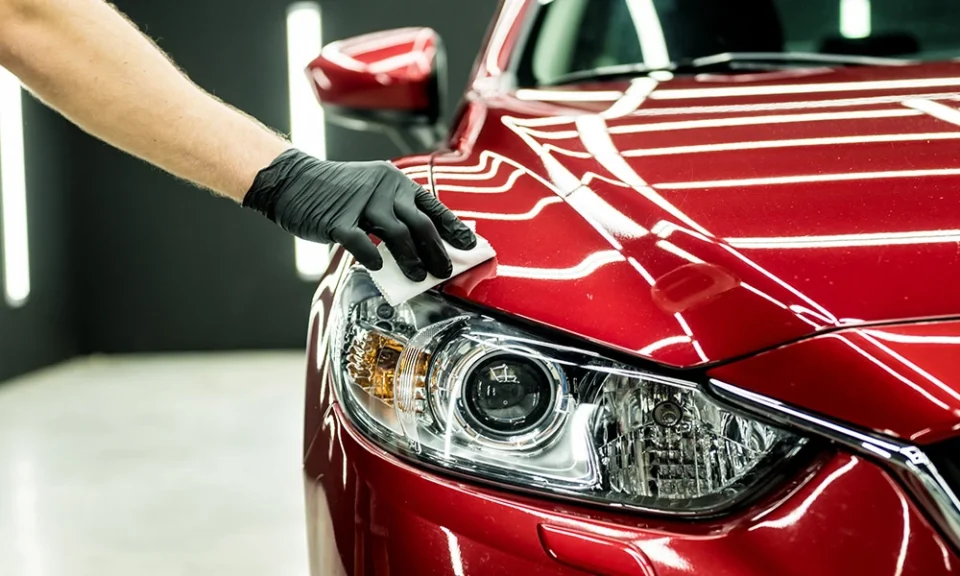
Ask ten car owners whether ceramic coating is worth the money over traditional wax, and you’ll likely get ten different answers – most of them shaped by whatever product they happen to be using at the moment. That’s not a knock on car owners; it’s just how the paint protection conversation tends to go. Wax has a century of tradition behind it, and ceramic coating has a decade or so of hype. Somewhere between nostalgia and marketing sits the actual answer, which depends less on brand loyalty and more on chemistry, climate, and how you actually use your vehicle.
This isn’t meant to talk anyone into or out of either option. It’s meant to explain what’s really happening on your paint’s surface in both cases, so the decision is based on how each product behaves rather than which one sounds more impressive on a product label.
What Wax Actually Does to Your Paint
Traditional car wax – whether it’s pure carnauba, a carnauba blend, or a synthetic polymer sealant – works by sitting on top of the clear coat rather than bonding into it. Carnauba itself comes from the leaves of the Copernicia prunifera palm, native to northeastern Brazil, and its appeal has always been aesthetic first: a warm, deep gloss that synthetic products struggle to fully replicate. Once buffed onto a clean surface, it forms a thin physical layer that fills in microscopic pores, smooths out light imperfections optically, and creates a barrier against water, road grime, and UV exposure.
The catch is durability. Because wax adheres through simple physical adhesion rather than a chemical reaction, it’s inherently a sacrificial layer. Washing, rain, heat, and UV exposure all wear it down steadily, which is why most detailers recommend reapplication every four to eight weeks depending on climate and how often the car is washed. That upkeep ritual is part of the appeal for enthusiasts who enjoy the process, but it also means the protection is never static – it’s always in a slow state of decline between applications.
What Ceramic Coating Actually Does Differently
Ceramic coating takes a different chemical approach entirely. Most professional-grade products are built around silicon dioxide (SiO2), sometimes combined with titanium dioxide, suspended in a liquid carrier. When applied and cured correctly, the SiO2 doesn’t just rest on the paint – it reacts with the clear coat at a molecular level, forming cross-linked bonds that become part of the surface itself rather than a layer floating above it. That’s the core distinction: wax coats the paint, while a properly cured ceramic coating becomes chemically attached to it.
The practical result is a harder, more chemically resistant surface – some fully cured ceramic coatings reach hardness ratings around 9H on the pencil scale, among the highest commonly cited in the detailing industry. That hardness translates into better resistance to light swirl marks, chemical etching from bird droppings and tree sap, and the kind of UV-driven oxidation that dulls paint over years of sun exposure. It’s a similar underlying principle to how ceramic particle technology is used elsewhere in the automotive world – independent testing from Consumer Reports on ceramic window tinting has found that ceramic-based materials generally block a meaningfully higher share of UV radiation than older, non-ceramic alternatives – the same materials science that makes ceramic paint coatings effective against fading and oxidation.
Some higher-end formulations also lean on titanium dioxide for a self-cleaning, photocatalytic effect, a property studied more broadly in nanocoating research – including work published through the National Center for Biotechnology Information on TiO2-based self-cleaning surface coatings, which found that these nanoparticle layers can help break down organic contaminants under UV exposure. In automotive coatings, this shows up as reduced grime buildup between washes rather than a fully “self-cleaning” car, but the underlying chemistry is the same family of technology.
Durability and the Real Cost Over Time
This is where the comparison usually gets decided in practice. A quality wax job typically holds up for four to eight weeks before protection starts noticeably declining. A professionally applied ceramic coating, by contrast, is generally rated to last anywhere from two to five years depending on the product tier, prep work, and how the vehicle is maintained afterward.
Priced per application, wax is cheaper. Priced per year of actual protection, the math tends to flip. Someone waxing a daily driver every couple of months is paying repeatedly for a product and the labor (or their own time) to apply it, year after year, while a ceramic coating is typically a single larger investment that holds its protective properties for several seasons before it needs attention again. Neither approach is objectively “wrong” – it depends on whether you value the lower upfront cost and hands-on ritual of waxing, or the reduced long-term maintenance of a cured coating.
Where Wax Still Earns Its Place
Ceramic coating isn’t automatically the better choice for every car or every owner. Wax remains a smart option for:
- Older or single-stage paint that may not tolerate the paint correction and prep work ceramic coating typically requires beforehand
- Show cars and low-mileage collector vehicles that are garage-kept and rarely exposed to the elements, where wax’s optical depth and warmth are valued more than long-term chemical resistance
- Owners who enjoy the detailing process itself and don’t mind – or actually look forward to – a seasonal waxing routine
- Budget-conscious upkeep between larger services, since wax remains one of the least expensive ways to add a temporary protective and cosmetic layer
Where Ceramic Coating Tends to Make More Sense
Ceramic coating generally justifies its higher upfront cost for:
- Daily drivers exposed to harsh sun, road salt, or heavy pollen and tree sap, where consistent UV and chemical resistance matters more than seasonal upkeep
- New vehicles or fresh paint jobs, where locking in protection early helps preserve resale value and finish quality
- Owners who want to wash less often and get more consistent results when they do, thanks to the coating’s hydrophobic properties
- Anyone tired of the reapplication cycle and looking for a longer-term, lower-maintenance solution
What Neither Product Will Do
It’s worth being direct about this, because marketing around both products tends to overpromise: neither wax nor ceramic coating prevents rock chips, deep scratches, or dents. Both operate at the level of the clear coat’s surface chemistry, not as a physical shield against impact damage. If chip protection on a front bumper or hood is the priority, that’s a job for paint protection film (PPF), not a coating or wax product, regardless of how the coating is marketed. Ceramic coating can make a car easier to keep clean and more resistant to chemical staining and minor swirling, but it isn’t armor.
Making the Right Call for Your Vehicle
The honest answer to “is ceramic coating worth it compared to wax” is that it depends on what you’re optimizing for. Wax rewards owners who enjoy the ritual and don’t mind reapplying it regularly. Ceramic coating rewards owners who want durable, lower-maintenance protection and are willing to pay more upfront for it.
If you’re still weighing the two for your specific vehicle and driving conditions, it can help to talk through the paint’s current condition with someone who works on cars like yours regularly. The crew at Diamond State Mobile Detailing walks customers through that comparison often, and for owners who land on the ceramic side of the decision, their ceramic coating service covers the paint correction and prep work that determines how well any coating actually performs over the long run. Whichever direction you go, the product matters less than the prep – a coating or wax applied over unaddressed swirl marks and contamination will only lock in the paint’s current condition, flaws included.
